
A guest article from Katherine Brown, Founder of Katherine Brown Curtains & Blinds
Today is World Sleep Day, and the theme this year is Sleep Well, Live Better. I cannot think of a more fitting moment to write this.
I’ve known Brent Cooper, the founder of Marshall and Stewart, for some time. He talks about beds the way I talk about windows: not as objects, but as decisions that quietly shape the quality of every day that follows. When he asked whether I would write something for his clients, I was genuinely pleased to say yes.
What follows is something I rarely take the time to say plainly. After years of designing and installing bespoke window treatments in bedrooms across London and beyond, I have come to believe that the window is the most underestimated element of a bedroom for sleep. Certainly, now that you know about the magic of a Marshall and Stewart Bed, then let me help with the next most important aspect – the blackout.
Even the finest bed will not perform as it should in a room that admits the wrong light at the wrong moment. The window and the bed work together. This World Sleep Day feels like a good moment to explain how.
The bedroom window is the most important window in the house
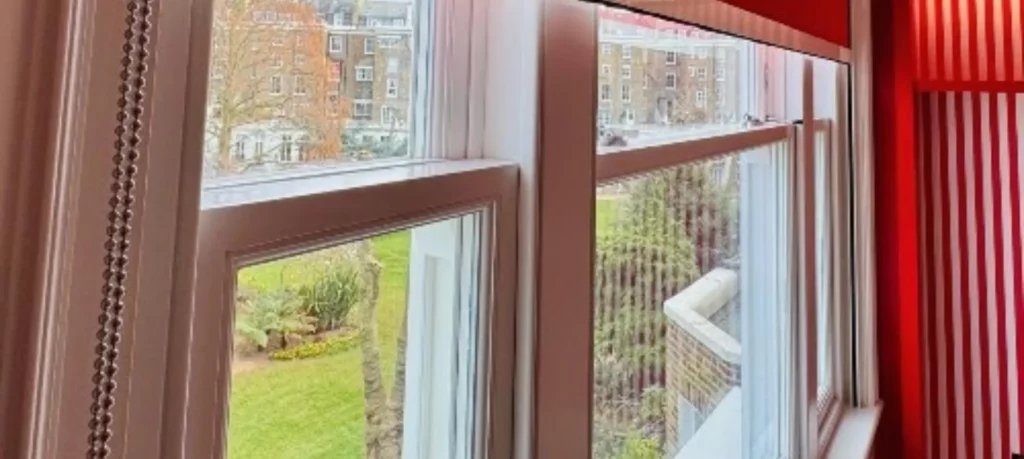
Most clients come to me thinking about the bedroom window last. The sitting room, the kitchen, the hallway: these are the spaces they want to feel proud of first. The bedroom, somehow, comes at the end.
I understand why. But from a sleep perspective, it is entirely the wrong way around.
A bedroom window that has not been properly considered will let light in before your body is ready to wake, undermine the temperature and atmosphere of the room, and quietly work against every other decision you have made about your sleep environment. You may have invested thoughtfully in your mattress and your bedding. If the window is not working, those investments are carrying a burden they should not have to.
What most people do not realise about blackout
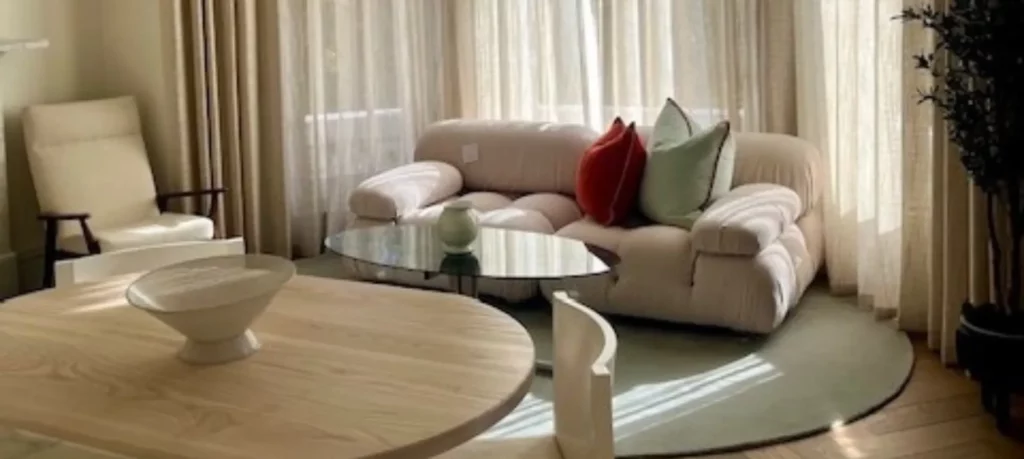
The word blackout has a reputation problem. People hear it and picture a heavy roller blind in an anonymous hotel room: functional, charmless, the sort of thing that gets a job done without any pretence of elegance. It is an image I have spent my career dismantling.
True blackout in a bedroom is not a single product decision. It is the sum of many smaller, considered ones. How high above the window is the track or pole mounted? Does the treatment extend well beyond the window frame at each side, or does it sit within the reveal? How does the fabric return to the wall to prevent light from creeping in at the edges? Is there a pelmet or a covered lath concealing the hardware and sealing the top of the treatment?
Each of these details matters. Each one affects not only how much light enters the room but also how the window looks, how the fabric hangs, and how the room feels as a whole. When they are all considered together, the result is something quite different from the hotel blind. The room is simply beautiful. And dark. And quiet.
[PROMPT FOR KATHERINE: Can you share a specific client bedroom where achieving true blackout made a dramatic difference, both to how the room felt and to how the client slept? What were the details that made it work?]
Why the light that arrives before you wake matters most
The body’s relationship with light is not a simple on-off switch. Daylight does not just wake you up. It begins pulling the body towards waking well before you open your eyes, suppressing the melatonin that keeps you in deep, restorative sleep. In a British summer, this process can begin alarmingly early.
What surprises many of my clients is how much this matters in the hours before they intend to rise. A bedroom that remains genuinely dark until seven in the morning is doing something quite different from one that admits the first light of a June dawn at five. Those hours between five and seven are often the deepest and most restorative of the night. Losing them consistently, without quite understanding why, has a real effect on how you feel and function across the day.
What our clients say:
‘The curtains were made to measure and gave us the blackout effect needed in our son’s nursery. They look smart too.’ — Charlie C.
The most common mistake I see in London bedrooms

London homes present particular challenges. Bay windows, original sash frames, cornicing that sits low and close to the glazing: these are the architectural features that make a period property beautiful and, if window treatments are not thought through properly, the same features that let light in exactly where you do not want it.
The most common mistake I see is a treatment chosen for how it looks from across the room, without any consideration for how it will behave at five in the morning. A beautifully made curtain hung on a pole fitted too close to the window frame will let light pour in at the top. A blind installed inside a deep reveal will look considered but achieve very little by way of true darkness. These are not difficult problems to solve, but they require someone to look at the window with the right questions in mind.
The bedrooms I am most proud of are ones where the window treatment is doing two things at once: it is genuinely beautiful, and it is genuinely working. There is no reason those two things should ever be in conflict.
What our clients say:
‘Very good experience. Helpful advice on fabric choices and reducing light infiltration. Smooth fitting process. Curtains are high-quality and look lovely.’ — Kate S.
A warm invitation to Marshall & Stewart clients

Brent’s clients already understand what it means to invest carefully in the decisions that shape how they sleep and live. If you have a Marshall & Stewart bed, or are in the process of choosing one, it would be a genuine pleasure to bring the same quality of thinking to your bedroom windows.
I visit clients at home across London and beyond, assessing the windows, understanding the room, and designing treatments that are made precisely for that space. There is no standard solution. There is only the right solution for your windows, your light, and your life.
You are welcome to find me at www.kbcurtainsandblinds.co.uk or to get in touch directly.
The sleep that Brent’s beds make possible is worth protecting. I would love to help you do that.
